Blog

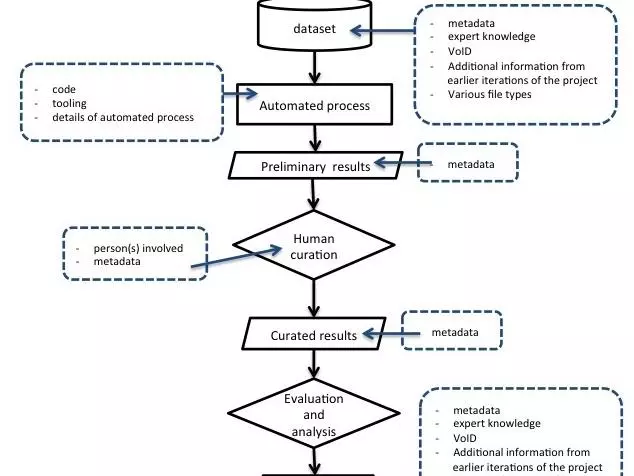
An annotated version of the flow chart from figure 1.

Workflows: how do researchers do their research? how does collaboration work?

As part of the Transforming Musicology project, we have tried to examine not just the academic and the technological aspects of musicological research, but also the way in which such work is carried out. This blog outlines what some of our observations.
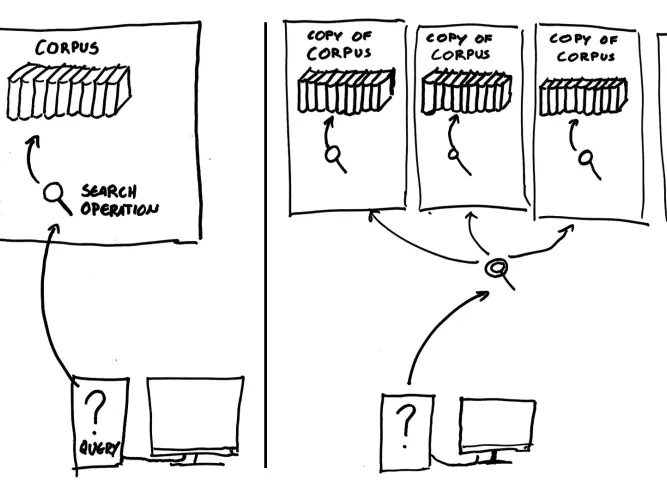
Simplified illustration showing a risk of parallel computation. The left image shows a query being operated on by a single process. In the right-hand case, the task has been divided into parallel processes, but each must load and maintain a full copy of t

Supercomputing opportunities for musicological investigations

The Transforming Musicology project carried out a preliminary investigation of the viability of supercomputing for the various tools being used within the project. This blog post summarises what we found.
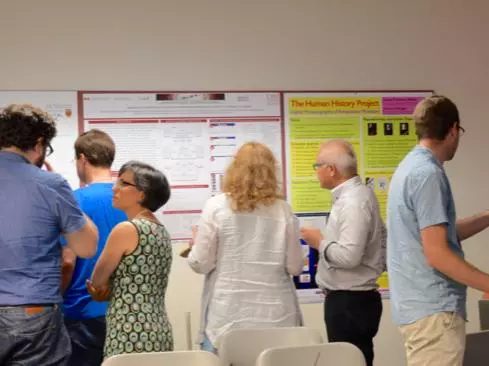
DLfM 2016: discussion over posters

Digital Libraries for Musicology 2016 Report

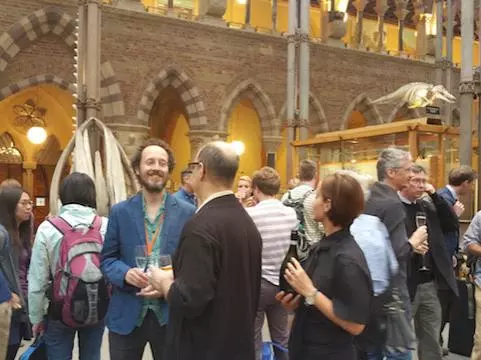
DHOxSS opening reception at Oxford's Museum of Natural History

Digital Humanities at Oxford Summer School (DHOxSS) 2016 Report

Report on our second Digital Musicology workshop at the week-long Digital Humanities at Oxford Summer School.
Placeholder

From lutetab to frettab

Expanding our exploration of how to represent tablature notation from looking at just historical lute music to include popular music for the guitar family is important. Richard looks at some of the changes we're making to support more tablature notations.
Placeholder

Musical Scholarship and the Future of Academic Publishing

Report on an event organised with the Academic Book of the Future project, looking at the future of scholarly publishing in music.
Placeholder

Musical Score Annotation Kit (MuSAK)

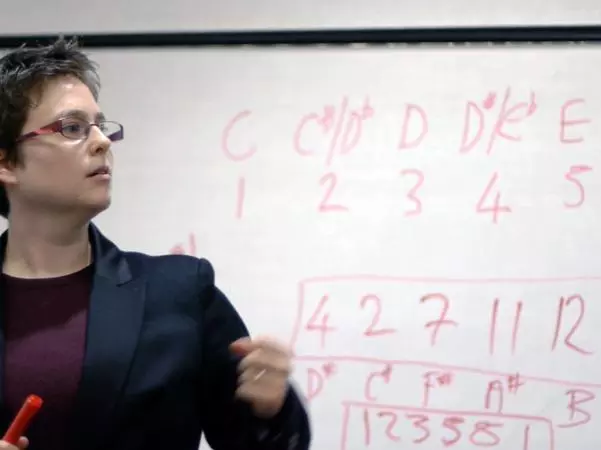
Emily Howard explaining 'numbers into notes'. Photograph by Angela Guyton.

Numbers into Notes - Ada Lovelace and Music

As part of the celebrations of the bicentenary of Ada Lovelace's birth, we explored mathematics, computation, and music through a performance of Ada sketches, a short operatic work by Emily Howard.
Placeholder

Addressing the Music Information Needs of Musicologists

Report of a tutorial at the International Society for Music Information Retrieval conference (ISMIR)
Placeholder

Digital Approaches to Early Music and Linked Music Hackathon

Report of a public workshop and hackathon run by the project, including public data that we work with and some specially provided for the day by RILM.
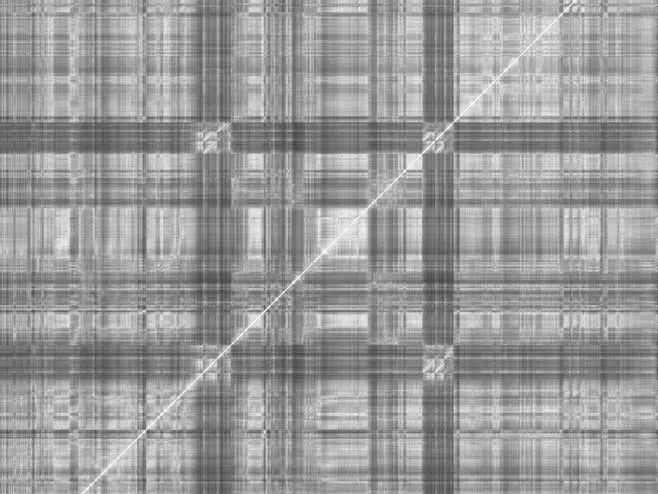
Trevor Wishart's Imago (2002), similarity matrix based on Euclidean distance between MFCC audio feature vectors over the piece's complete 26 minute duration

Large-scale corpus analysis of historical electronic music

Analysing electronic music for a Transforming Musicology miniproject.
Placeholder

Setting up audio search tools

Installing audioDB, a multi-dimensional feature database search tool designed for audio.
Placeholder

Similarity: haven't we heard this before somewhere?

Similarity is an important concept in our project and much other research, but do we really know what it is? Is it even a single thing?
Placeholder

Medieval Music, Big Data and the Research Blend

Understanding conductus: Gregorio writes about the miniproject searching the Web for texts of this medieval genre.
Placeholder

Thrash Metal, Wiki Data, and The Problem of Web Scraping

Was thrash metal started in 1918? Justin discusses the reliability of online data.
Placeholder

Does Wagner do your head in?

The Transforming Musicology team was at Wagner's Ring Cycle at the Birmingham Hippodrome this month, capturing physical data from audience members.
Placeholder

Introducing Wagnerism

If Richard Wagner were to have known before he died that some scientists in the future would create a psychometric tool to measure the "Wagnerism" in a given individual, would he be flattered or appalled?
Placeholder

Project-level linked data

Strategies for publishing linked data within the project.
Placeholder

Customising MEI for lute tablature

The Music Encoding Initiative provides an open standard for publishing notated music, but its support for tablatures is currently weak. In this post, Richard discusses plans to improve it.
Placeholder

Listening for Leitmotives in Wagner

Considering how different groups of people experience leitmotifs has remained very unexplored in much of the academic literature. David Baker talks about how we're approaching this question.
Placeholder

Marking up opera

Opera libretti represent a special sort of structured text. In this post, Richard describes an approach to recording that structure using an extension of the Text Encoding Intiative standard.
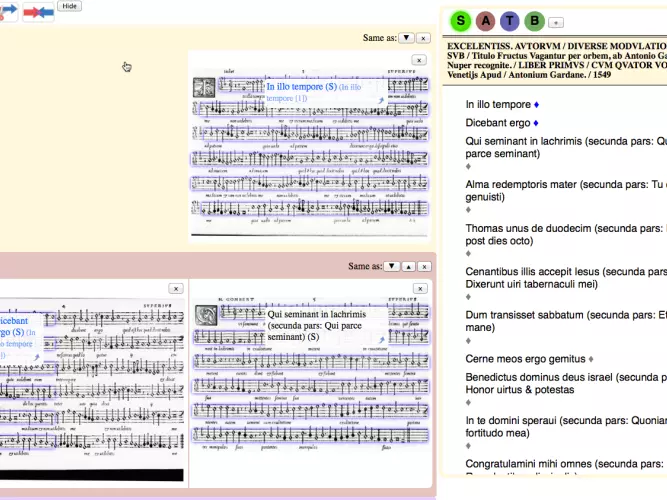
A prototype for editing source inventories, showing piece titles and partbook images

EMO catalogue and images: Where to go from here

A brief description of efforts to enrich the catalogue information from Early Music Online and to relate it to specific page images
Placeholder

Mini-projects networking meeting

Placeholder

Exploring musical data sources

Collections of music for use in the project will have some information in common. This entry discusses APIs and semantic web technologies to allow us to structure this common information.
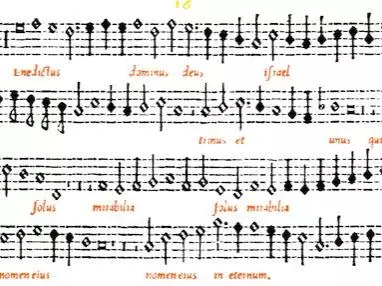
Book k4c11, image 9, coloured by Aruspix to show identified regions

EMO work alignment using musical content

Using automally-transcribed musical content as a means of identifying works in Early Music Online, connecting to both other pieces in EMO and in external resources such as RISM.
Placeholder

Collaborating with the PRAISE project

Exploring connections between Transforming Musicology and an education-related project, PRAISE (Practice and peRformance Analysis Inspiring Social Education).
Placeholder

Social Music Analysis Widget

What might software to support analysing social, online music interactions look like?
Placeholder

Starting up

First project blog post.